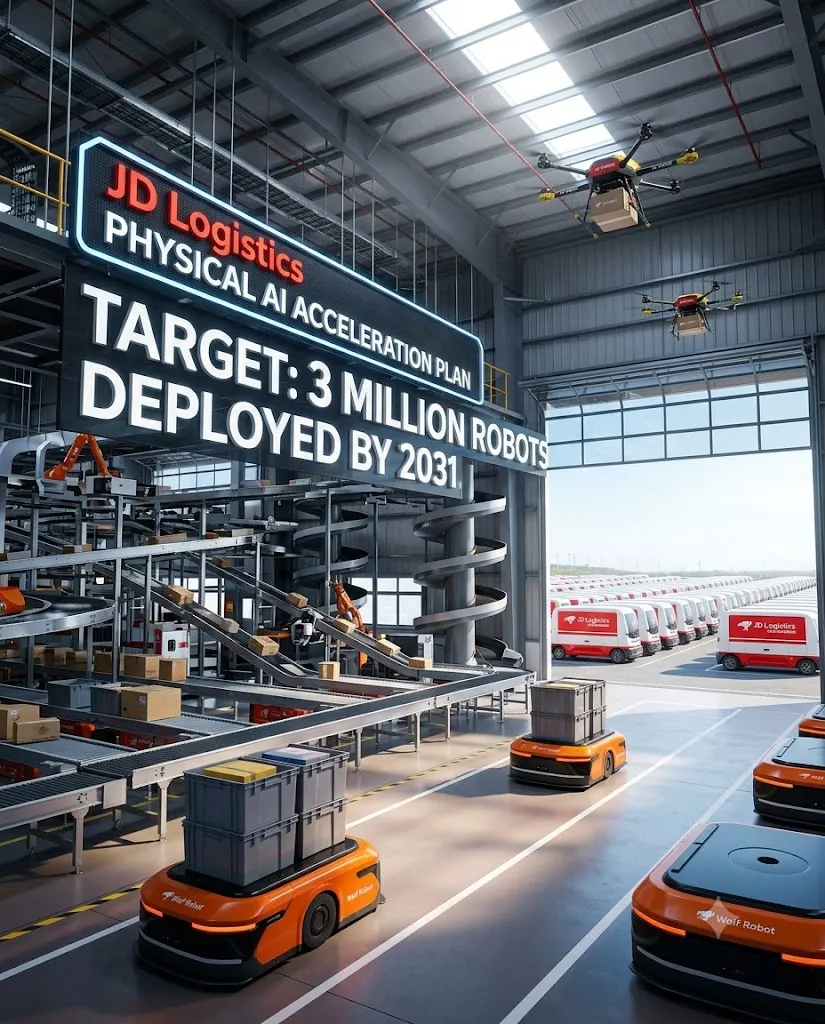
How AI Agents Fix the 'Detect Fast, Act Slow' Supply Chain Problem
Supply chains have mastered the art of real-time detection, pinpointing disruptions the second they occur. However, the human bottleneck in decision-making leaves operations acting too slowly. Enter autonomous AI agents—the ultimate solution to executing rapid, independent logistics responses.
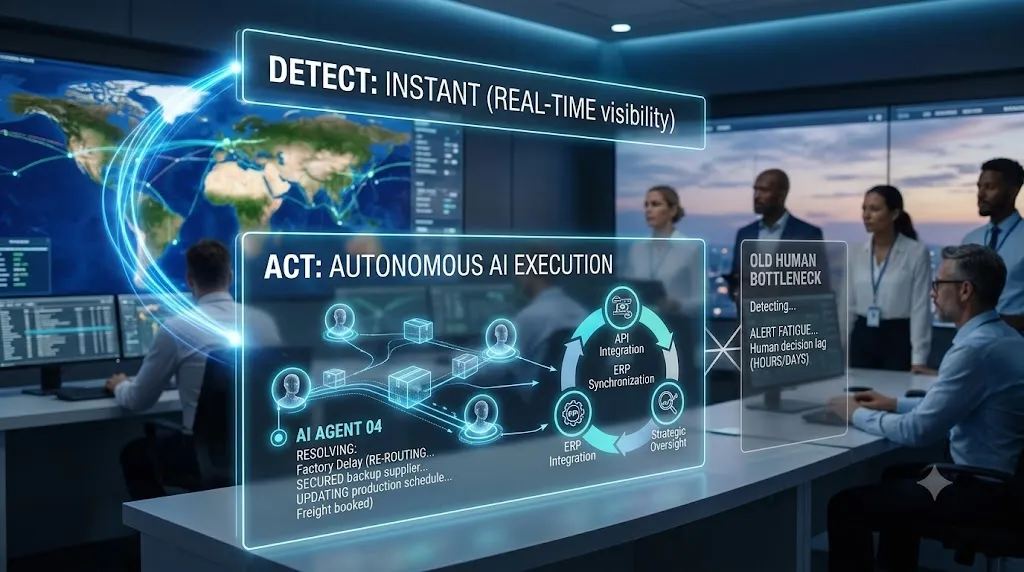
Supply Chains Detect Fast, Act Slow: How AI Agents Are Fixing the Bottleneck
In 2026, the global supply chain has achieved unprecedented visibility. Thanks to a web of IoT sensors, satellite tracking, and predictive analytics, companies know exactly when a cargo ship is delayed by a storm, when a factory in Asia goes offline, or when a local port faces a sudden labor strike. The detection is nearly instantaneous.
Yet, despite this real-time awareness, the response is often painfully slow. This phenomenon—coined the "detect fast, act slow" paradox—is costing the logistics industry billions. Now, a new wave of autonomous AI agents is stepping in to close the execution gap.
The "Detect Fast, Act Slow" Paradox
Modern logistics control towers are brilliant at sounding the alarm, but they rely entirely on human operators to put out the fire. When a disruption flashes on a dashboard, a human supply chain manager must:
Analyze the impact of the delay.
Cross-reference current inventory levels across multiple warehouses.
Email alternative suppliers to check capacity and pricing.
Manually update the Enterprise Resource Planning (ERP) software.
Negotiate and book new expedited freight.
This manual chain of command takes hours or even days. By the time a decision is finalized, the optimal window for a cost-effective solution has usually closed, leaving companies to pay premium rates for emergency air freight or face stockouts.
How AI Agents Close the Execution Gap
The solution lies in the transition from analytical AI to agentic AI. While traditional AI tells you what is happening, AI agents actually do the work to fix it.
Instead of just sending an alert that a shipment of microchips will be five days late, an autonomous AI agent instantly triggers a resolution workflow:
Immediate Assessment: The agent scans global inventory and realizes a specific assembly line will halt in three days.
Supplier Negotiation: It autonomously reaches out to pre-approved backup suppliers via API or email, securing the missing components at the best available margin.
Logistics Execution: The agent books the necessary freight, completely re-routing the supply path.
System Synchronization: It updates the company's ERP, adjusts the production schedule, and sends a concise summary report to the human managers.
From Dashboards to Autonomous Action
We are shifting from an era of "alarm fatigue" to an era of automated resilience. Companies are realizing that having the world's fastest detection system is useless if it is tethered to human processing speeds.
By delegating the execution layer to AI agents, human logistics professionals are freed from the mundane panic of daily disruptions. They can step back to focus on strategic relationships, long-term network design, and high-level negotiations. As these agentic systems become more sophisticated and integrated into our daily tech stacks, the supply chain of the future will not just be visible—it will be fully self-healing.
Comments
Log in to leave a comment.